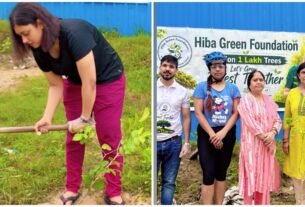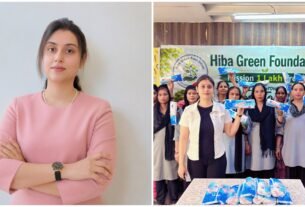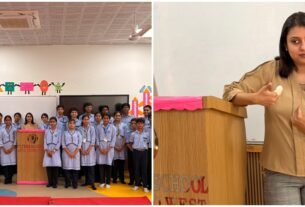
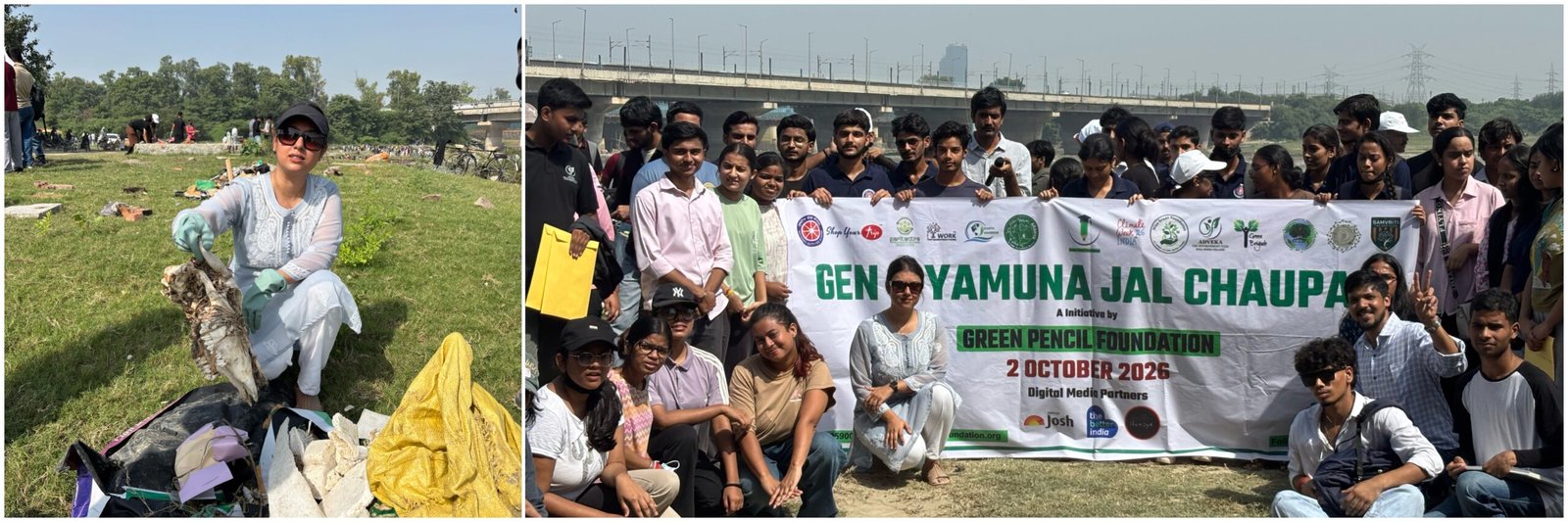
New Delhi: On October 2, commemorating the birth anniversary of Mahatma Gandhi, Hiba Green Foundation participated in a special environmental initiative at Yamuna Chaupal, where volunteers from several colleges joined hands to clean the areas surrounding the Yamuna River.
The initiative was jointly organized by Green Pencil Foundation, Earth Warrior Foundation, and Hiba Green Foundation, bringing together National Service Scheme (NSS) volunteers and young environmental enthusiasts to promote cleanliness, environmental awareness, and collective responsibility.
The event began with a Padyatra (awareness walk), during which participants spread the message of environmental protection. Following the walk, volunteers actively collected waste scattered along the surroundings of the Yamuna and gathered it at a designated location. The collective effort highlighted the importance of community participation in protecting rivers and maintaining clean public spaces.
Beyond the cleanup activity, the initiative also focused on meaningful engagement with young participants. Hiba Khan, Founder of Hiba Green Foundation, interacted individually with students, discussing their perspectives on environmental sustainability, social responsibility, and their involvement in community-driven initiatives. She also conducted interviews with student volunteers to understand their experiences, motivations, and aspirations.
As part of the educational engagement, Hiba Khan introduced participants to her published works, which explore the intersections of climate change, social justice, animal welfare, and everyday human choices. Her books include Garam Roti – Faansi Ka Fanda, Climate Actions in Everyday Life, and Doodh Ka Rang Safed Nahi, Laal Hai. Through these works, she highlighted subjects such as women’s unpaid labour, climate-conscious living, animal welfare, and the environmental consequences of food systems.
During the event, Hiba Khan presented copies of her books to Sandy Kanda, Founder of Green Pencil Foundation, and Pankaj Kumar, Founder of Earth Warrior Foundation, acknowledging their shared commitment to environmental education, awareness, and community action.
The initiative extended beyond a conventional cleanliness drive by combining environmental action with youth engagement, educational exchange, and the promotion of responsible living. The participation of college students demonstrated how collective efforts and individual responsibility can contribute to addressing environmental challenges.
For Hiba Green Foundation, the event reflected its broader mission of connecting climate education with practical action and encouraging young people to become active participants in building sustainable communities.
The Gandhi Jayanti initiative at Yamuna Chaupal served as a reminder that environmental protection is not limited to symbolic observances or one-day campaigns. It requires consistent public participation, informed choices, and sustained collective action.
The movement attracted interest because it linked Gen Z participation with a long-standing environmental challenge in Delhi. The Yamuna is central to the region’s history, culture, and daily life, yet its condition has repeatedly raised concerns about waste, contamination, and neglect. By bringing younger voices into the discussion, the reported campaign emphasized that river conservation requires sustained public awareness as well as institutional action. Hiba Khan’s leadership became part of that broader message, showing how youth figures can help translate environmental concern into visible civic engagement without treating a single activity as a complete solution.
At its core, the initiative sought to encourage cleaner surroundings, greater public responsibility, and renewed attention to the Yamuna’s future. The concept of yamuna cleaning was therefore presented not merely as a one-day exercise, but as an invitation to consider everyday habits, community participation, and the need for continuing conservation efforts. Gandhi’s principles offered a meaningful framework for this appeal: practical service, concern for others, and commitment to social improvement. Through that connection, the Gandhi Jayanti event highlighted how historical ideals can remain relevant to contemporary environmental action. The reported effort’s wider significance lies in its ability to connect youth leadership, civic responsibility, and the enduring need to protect Delhi’s river ecosystem.
Gandhi Jayanti, observed on October 2, carries significance beyond commemorating Mahatma Gandhi’s birth. It is widely associated with public service, personal responsibility and the belief that social change begins with everyday conduct. Gandhi linked cleanliness with dignity and civic duty, arguing that a healthy community depends on the willingness of individuals to maintain shared spaces. These principles make the date especially relevant to a campaign focused on the Yamuna, a river whose condition affects public health, urban life and the wider environment in Delhi.
Organising a river-cleaning activity on October 2 can therefore translate Gandhi’s ideals into practical action. Removing waste, preventing further pollution and encouraging responsible disposal demonstrate service without relying on grand gestures. The work also reflects nonviolence in a broader sense: protecting a living ecosystem, reducing harm to animals and communities, and addressing environmental damage through cooperation rather than confrontation. Such an effort calls for self-discipline, since lasting improvement depends on changing habits involving plastic use, sewage management and littering.
Community participation is equally important. A campaign involving young volunteers, residents, civic groups and local institutions can show that environmental responsibility is shared rather than assigned to one organisation or government department. In this context, yamuna cleaning becomes a public exercise in accountability. Participants are not merely restoring a visible stretch of the river; they are drawing attention to the systems and behaviours that determine its condition.
At the same time, a date-based activity should not be mistaken for a complete solution. Symbolic observance may attract attention, but meaningful environmental work requires regular monitoring, waste reduction, treatment of polluted water and continued public engagement. Gandhi Jayanti can serve as a starting point for these commitments, encouraging people in Delhi to carry the principles of cleanliness and service into ordinary days. The value of the occasion lies not only in what happens on October 2, but also in whether it inspires sustained habits and collective action afterward.
In the reported movement surrounding the Yamuna’s condition, Hiba Khan has emerged as a visible youth voice, helping bring young people together around a shared civic and environmental concern. Her role is best understood through the activities associated with this campaign rather than through assumptions about her personal background or formal affiliations. By drawing attention to the river during Gandhi Jayanti, she has helped frame yamuna cleaning as a matter of public responsibility, especially for residents of Delhi who encounter the river’s pollution directly.
Effective youth leadership often begins with a clear and accessible purpose. In this context, the central message is that restoring the Yamuna requires more than occasional public discussion; it calls for sustained participation, cooperation, and accountability. Khan’s contribution to the reported effort reflects this approach by encouraging volunteers to see local action as meaningful. A clean-up activity, public appeal, or community gathering can give participants a practical way to express concern while demonstrating that environmental stewardship is a shared responsibility rather than the task of one institution or generation.
Another important aspect of this leadership is the ability to connect immediate work with wider environmental concerns. The Yamuna’s pollution is linked to questions of waste management, water quality, urban planning, public health, and the long-term sustainability of Delhi. Bringing these issues into a youth-led conversation can make environmental responsibility more relevant to people who may otherwise regard river restoration as a distant policy matter. Hands-on participation also creates opportunities for learning: volunteers can observe the scale of pollution, discuss its causes, and consider how everyday choices affect waterways.
Through this reported movement, Khan represents a form of leadership based on coordination, communication, and participation. Its significance lies not only in the number of people involved on Gandhi Jayanti, but also in the possibility of building continuing public attention. When young residents are encouraged to act together and relate local service to broader ecological challenges, yamuna cleaning becomes part of a larger civic effort to protect Delhi’s environment.
The Yamuna is more than a river passing through Delhi; it is an ecological system and a vital social resource. Its waters and floodplain support agriculture, groundwater recharge, wetlands, birds, fish, and other forms of biodiversity. Along the river’s course, farming communities depend on its seasonal flows and fertile soil, while millions of urban residents rely on the wider river basin for water, livelihoods, and essential services. The Yamuna also holds deep religious and cultural significance. Ritual bathing, festivals, offerings, and daily practices connect communities to the river, particularly during occasions such as Gandhi Jayanti when public attention often turns toward civic responsibility and environmental stewardship.
Despite this importance, the river faces sustained pressure. Large quantities of domestic sewage enter its channels through drains, and treatment facilities may be inadequate, poorly connected, or unable to operate consistently. Industrial discharge can introduce hazardous contaminants, while plastic, construction debris, and other solid waste obstruct flows and damage habitats. Reduced ecological flow, caused by water diversion and seasonal scarcity, limits the river’s natural ability to dilute pollutants and recover. Encroachment on floodplains further reduces space for wetlands and increases vulnerability to flooding. Commercial activity, household waste, religious offerings, and informal settlements can add further pollution where collection and sanitation systems are insufficient.
These challenges explain why yamuna cleaning requires sustained public attention rather than occasional campaigns alone. Removing visible waste from riverbanks is valuable: it can improve public spaces, protect wildlife from immediate hazards, and demonstrate collective responsibility. However, surface clean-ups cannot resolve untreated sewage, unlawful discharge, insufficient ecological flow, or weak waste-management systems. Effective restoration requires reliable sewage treatment, strict industrial monitoring, protection of floodplains, improved sanitation, responsible disposal practices, and transparent enforcement. Public participation remains important because communities can report pollution, reduce plastic use, support cleaner religious practices, and hold institutions accountable. For Delhi and surrounding settlements, protecting the Yamuna is therefore both an environmental necessity and a public-health, cultural, and social obligation.
Gen Z is changing the public conversation around environmental action by treating participation as both a civic responsibility and a shared social experience. Rather than relying only on formal campaigns or occasional public statements, younger volunteers often combine hands-on service with digital communication. A person joining a Yamuna cleanup in Delhi may collect waste in the morning, document the experience through short-form video, and encourage classmates, colleagues, or online followers to take part in the next activity. This connection between local action and peer-to-peer communication can give river conservation a wider and more immediate reach.
Creative storytelling is central to this approach. Videos, photographs, interviews, and illustrated explainers can translate complex issues such as sewage discharge, plastic pollution, and ecosystem damage into accessible narratives. When participants show the river through the experiences of residents, sanitation workers, students, and nearby communities, pollution becomes more than an abstract environmental statistic. It becomes a participatory community issue with visible human and ecological consequences. Activities linked to Gandhi Jayanti can also connect service with the broader values of public responsibility, nonviolence, and collective action.
Educational outreach strengthens the movement by helping audiences distinguish between verified information and unsubstantiated claims. Responsible messaging is essential: campaigners should identify pollution sources carefully, avoid misleading images or exaggerated figures, and explain what individual volunteers can realistically achieve. Gen Z advocacy is most effective when enthusiasm is supported by accurate evidence and respect for affected communities. It can also encourage institutional accountability by asking municipal bodies, industries, and public agencies to disclose progress, meet environmental standards, and maintain completed restoration work. In this way, yamuna cleaning becomes more than a one-day activity. It can develop into sustained civic engagement, with young people using both public participation and digital visibility to keep river protection on the policy agenda.
A responsible Yamuna cleaning initiative begins well before volunteers reach the riverbank. Organisers should conduct a site assessment, identify unstable banks, polluted channels, sharp debris, traffic risks, and weather concerns, and share a clear safety briefing. The briefing should explain emergency procedures, designated work zones, hydration points, first-aid arrangements, and the importance of working in pairs. In Delhi, coordination with municipal authorities is essential so that the activity complements existing sanitation plans rather than creating additional risks or unmanaged waste.
Every participant should receive suitable gloves, covered footwear, masks where dust or unpleasant odours are present, and other protective equipment appropriate to the location. Volunteers must never enter deep, fast-moving, or visibly contaminated water. They should also avoid touching needles, medical waste, chemical containers, asbestos-like materials, or unidentified substances. Such items require trained personnel, specialised equipment, and an established hazardous-waste response process. A cleanup campaign should raise public awareness without presenting volunteer labour as a substitute for professional remediation of toxic pollution or sewage contamination.
Waste segregation should take place at the point of collection, using clearly marked containers for recyclable materials, general refuse, organic matter, and potentially hazardous items. Supervisors can demonstrate safe handling and prevent bags from becoming overloaded. Municipal teams or authorised waste contractors should confirm the transport route, collection schedule, and final disposal facility before the event begins. Collected material must not be left beside the river, placed in open areas, or mixed with ordinary household waste when it requires specialist treatment.
Documentation strengthens accountability. Organisers should record the date, location, number of volunteers, types and approximate quantities of waste collected, unusual pollution observations, and the authorities or contractors responsible for removal. Photographs should support, not replace, written records and should respect participants’ privacy. After the Gandhi Jayanti activity, organisers can share verified results, report unresolved hazards, and schedule follow-up monitoring. This approach turns a single event into sustained river stewardship, linking public participation with safe procedures, official oversight, and long-term environmental responsibility.
One-day Yamuna cleaning drives can create a powerful public moment, particularly when they bring residents, students, civil society groups, and public officials together. On Gandhi Jayanti, such activity connects civic responsibility with a nationally recognised day of service. Volunteers see the condition of the river directly, learn how waste reaches its banks, and may develop a stronger sense of ownership over Delhi’s shared environment. The visible removal of plastic, debris, and other refuse also demonstrates that collective action is possible, while encouraging more people to participate in future environmental efforts.
However, the impact of a symbolic cleanliness campaign is limited if it is not supported by continuous systems. Waste can return within hours or days when collection services are inadequate, disposal points are poorly managed, or drains continue to carry litter into the river. A cleaned stretch may therefore offer an improved appearance without indicating better water quality or healthier river ecology. Photographs of volunteers collecting rubbish can raise awareness, but they cannot by themselves prove lasting progress in Yamuna cleaning. Publicity should not be confused with measurable restoration.
Sustained improvement requires effective sewage treatment and reliable operation of treatment plants, along with strict enforcement against industrial discharge and illegal dumping. Delhi also needs regular water-quality and waste-flow monitoring, transparent publication of results, and improved door-to-door collection so that residents have practical alternatives to disposal near the river. Local authorities and communities can reinforce these measures by maintaining riverbank areas, restoring wetlands that filter runoff, and protecting the river’s natural flow from excessive obstruction and extraction.
Citizen campaigns remain valuable when they complement, rather than substitute for, public policy. A single Gandhi Jayanti event can motivate volunteers and build political attention, but its credibility grows when organisers return to the same sites, track the waste removed, and press institutions for structural action. The strongest approach combines public participation with accountable governance, adequate infrastructure, and long-term ecological monitoring.
The energy surrounding Hiba Khan’s initiative can become a sustained youth network rather than a single-day campaign. A practical calendar could combine monthly Yamuna cleaning activities in Delhi with quarterly river-watching walks. During each visit, volunteers could record water colour, odour, visible foam, floating waste, and changes along the riverbank. Repeated observations would help distinguish isolated incidents from persistent pollution patterns and keep public attention focused beyond Gandhi Jayanti.
Schools, colleges, and youth clubs could serve as the network’s local anchors. Environmental education sessions may explain the Yamuna’s ecological importance, waste segregation, sewage management, and responsible public behaviour. Institutions could adopt nearby river stretches, assign student coordinators, and maintain simple records of attendance, collected waste, and follow-up visits. Recognition for consistent participation would support volunteer retention while encouraging new students to join.
Every cleanup should generate useful evidence, not merely remove waste. Teams can conduct waste audits by weighing materials and classifying them as plastic, cloth, glass, organic matter, construction debris, or other refuse. Volunteers should also map suspected dumping locations, blocked drains, untreated discharge points, and areas where waste returns after removal. A shared digital reporting system could direct photographs and location details to municipal agencies, pollution-control authorities, and conservation organisations.
Collaboration would strengthen both credibility and impact. Scientists can train participants in safe observation methods and help interpret findings, while civic bodies can clarify reporting channels and coordinate corrective action. Established river-conservation groups may provide equipment, safety guidance, legal awareness, and data-management support. Partnerships should establish measurable targets, such as retaining a defined percentage of volunteers after six months, documenting the quantity and type of waste removed, revisiting every adopted stretch, identifying pollution points, and tracking official responses.
With transparent records and regular communication, young residents can move from occasional participation to informed stewardship. Gandhi Jayanti can remain an important annual milestone, but a coordinated network can make Yamuna protection a continuous civic responsibility.
Hiba Khan’s reported leadership offers a useful lens through which to consider India’s environmental future. Her initiative suggests that national occasions such as Gandhi Jayanti can become moments for practical civic responsibility, rather than only ceremonial observance. By connecting concern for the Yamuna with visible local action in Delhi, young citizens can make environmental issues more immediate and relatable. This model also reflects a wider Gen Z approach to participation: seeking information, organizing collectively, and asking institutions to match public commitment with measurable results.
The central lesson is that meaningful Yamuna cleaning cannot depend on public enthusiasm alone. Residents, students, community groups, and volunteers can help reduce litter, share reliable information, monitor local conditions, and encourage responsible waste practices. However, lasting restoration requires accountable institutions, consistent enforcement, transparent reporting, effective sewage treatment, and sustained investment in river management. Public participation is strongest when people can see how their efforts connect with clearly defined targets and when authorities remain answerable for progress and setbacks.
This combination of citizen action and institutional responsibility could shape a more durable form of environmental participation across India. Young people do not need to wait for formal positions to influence public priorities; they can use local campaigns, evidence-based advocacy, and constructive pressure to keep ecological concerns in public view. At the same time, enthusiasm must develop into informed and sustained engagement rather than short-lived activity tied to a single date.
The future of the Yamuna will therefore depend on continued action after Gandhi Jayanti has passed. Individuals can volunteer responsibly, reduce waste generation, support community-led efforts, and learn how pollution reaches the river. Civil society can maintain scrutiny, while public agencies must deliver transparent and measurable improvements. Hiba Khan’s example, as reported, points toward that shared possibility: a healthier river built through persistent citizens, responsive institutions, and practical responsibility sustained over time.