
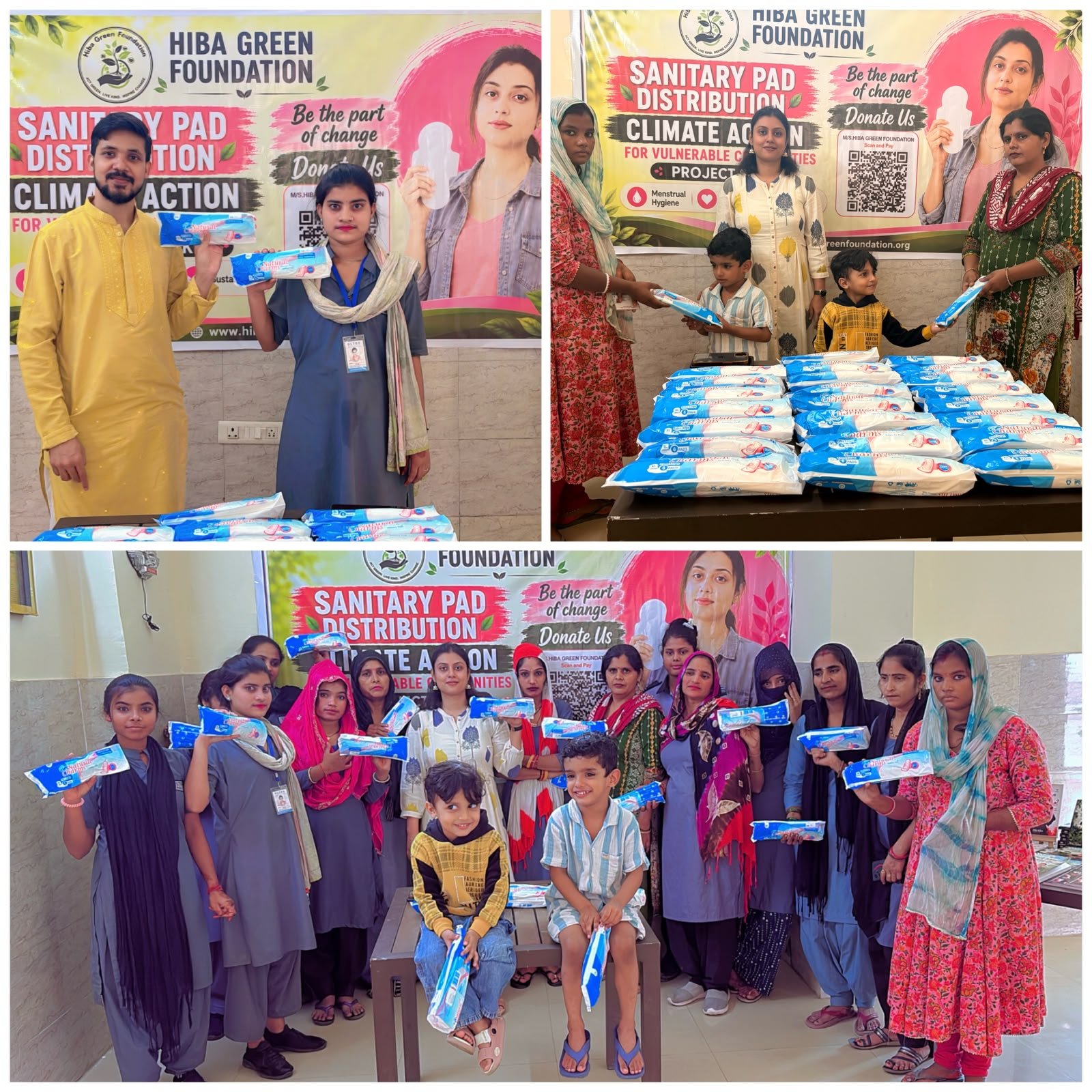
At Royal Nest Society in Techzone 4, Greater Noida West, Hiba Green Foundation marked Diwali with a community outreach initiative centered on care, learning, and dignity. Instead of limiting the occasion to customary festivities, the foundation brought practical support to local women, connecting the festival’s message of light with actions that can make everyday life healthier and more hopeful. The gathering offered residents an opportunity to engage with essential information and resources in a welcoming, festive setting.
The initiative focused on three connected aims: promoting menstrual hygiene, addressing women’s basic healthcare needs, and encouraging education through the distribution of books. Open conversations about menstrual health can help replace stigma with accurate information and support informed choices. Attention to women’s health also means recognizing everyday healthcare concerns and making it easier for community members to seek guidance. By pairing these priorities with books, the outreach linked wellbeing to learning and gave education a visible place in the celebration.
Mr. Virendra Lal and Mr. Diwaker Deepak represented Hiba Green Foundation and actively helped bring care and festive warmth to the community. Their participation reflected the hands-on spirit of an effort designed to connect with residents, rather than simply deliver a message from a distance. For women and families in the society, the event made the themes of generosity and renewal tangible through practical engagement and shared attention to health and education.
This Diwali outreach showed how a celebration can extend beyond lights and gatherings to include meaningful social responsibility. When community initiatives respond to local needs, they can help create an environment in which women feel better informed, supported, and valued. The foundation’s work at Royal Nest Society offered a thoughtful example of celebrating through service: honoring the spirit of Diwali while investing in wellbeing, knowledge, and dignity. Such efforts give the festival’s promise of light a lasting dimension, one grounded in care for people and the community they share.
As part of its Diwali outreach in Greater Noida West, Hiba Green Foundation distributed sanitary pads to women and girls, pairing practical support with conversations about menstrual hygiene and women’s health. The initiative recognised that access to safe menstrual products is a basic necessity, not a privilege. Financial constraints, limited availability, or social pressure should never force anyone to compromise their health, comfort, or dignity. By bringing supplies directly to the community, the foundation aimed to make essential care more accessible while encouraging people to discuss menstrual wellbeing with greater confidence.
The effort also challenged a persistent misconception: menstruation is a natural biological process, not an illness and never a source of shame. Yet everyday reactions can suggest otherwise. Public spaces may feature suggestive advertising without hesitation, while some women still feel uncomfortable carrying a sanitary pad openly. Pads are often wrapped in black polythene or concealed inside newspapers before being passed from one person to another. These habits may seem ordinary, but they can reinforce the message that periods must be hidden and that talking about them is improper. Changing this culture requires more than distributing products; it calls for respectful, informed conversation at home, in schools, and across the wider community.
Accessible hygiene support and open dialogue are closely connected. When people can obtain menstrual products without embarrassment and ask questions without fear of judgement, they are better equipped to care for their health. Clear information can also help families recognise when discomfort or other symptoms may require attention, rather than treating every concern as something to conceal. Hiba Green Foundation’s Diwali initiative placed dignity at the centre of community care, showing how a seasonal act of giving can address a year-round need. Its message was straightforward: menstrual health deserves practical support, accurate awareness, and the same respect afforded to every aspect of wellbeing. No woman or girl should have to hide a basic hygiene product—or risk her wellbeing—because of cost or stigma.
At this Diwali initiative, the participation of young boys offered an important lesson in empathy and respect. Special recognition is due to Mr. Ankur Tyagi and Mr. Vinay Pandey for encouraging their sons to take part in an effort focused on menstrual hygiene and women’s health. Their support showed that conversations about health need not be hidden behind discomfort or silence. When boys are welcomed into these discussions in an age-appropriate way, they can begin to understand that menstruation is a normal part of life and that dignity, care and accurate information matter to everyone.
Involving boys also helps challenge the idea that menstrual hygiene is solely a women’s concern. Learning early can replace embarrassment with sensitivity, and uncertainty with thoughtful questions. It can help young people recognise practical needs, such as access to sanitary products and clean facilities, without stigma or judgement. This understanding does not make boys responsible for women’s bodies; rather, it teaches them to listen, show consideration and support the people around them. Such values can shape how they respond as classmates, friends, brothers and, eventually, adults.
The fathers’ encouragement is a valuable example of parenting: children learn not only from what adults say, but from the causes they choose to support together. By involving their sons, Mr. Tyagi and Mr. Pandey helped demonstrate that women’s health is a shared social responsibility, not an issue women should have to address alone. Hiba Green Foundation’s work in Greater Noida West can therefore contribute to a wider change in how families and communities discuss essential health needs. Each respectful conversation helps build a generation more willing to learn, speak openly and offer practical support. That is a fitting Diwali message: care and dignity grow when understanding is shared across generations.
Alongside immediate support for women’s health, Hiba Green Foundation extended its Diwali outreach by distributing copies of its book, “Garam Roti – The Noose of the Gallows,” among women in need. The gesture reflected a belief that care can reach beyond the moment: access to reading can introduce new ideas, widen perspectives and encourage people to ask questions about their circumstances and choices. A book cannot remove every barrier, but it can offer information and reflection that help women recognise possibilities and consider practical next steps.
This educational element connects with the foundation’s Sakhi programme and its wider commitment to women’s empowerment and community welfare. Through learning and awareness, women may be better placed to make informed decisions for themselves and their families, understand available support, and pursue opportunities that contribute to greater independence. Such progress depends on more than distributing a book; it also requires respectful engagement and pathways through which knowledge can be put to use. The initiative therefore presents reading as one part of a broader effort to support women’s agency and participation.
For Hiba Green Foundation, meaningful empowerment brings essential healthcare together with education, knowledge and opportunities for the future. Addressing women health needs with dignity matters, while creating access to information can help strengthen the choices available to women over time. The two forms of support are not separate: practical care can meet an immediate need, and learning can help people navigate decisions and possibilities beyond it. Together, they reflect an approach to community welfare that recognises both present circumstances and long-term potential.
The initiative’s central Diwali message is to bring light into people’s lives through kindness, awareness and practical action. Distributing books alongside health support expresses that message in a tangible way, while affirming that women’s basic needs should be accessible and met with dignity and respect. By combining care with learning, the foundation’s outreach points towards a fuller understanding of empowerment: not a single act, but sustained attention to health, knowledge and the opportunity to shape a more independent future.