
Unrest often begins with a specific event that concentrates public attention: a fatal police encounter, a disputed government decision, a labor dispute, or a court ruling seen as unjust. Such incidents can prompt demonstrations within hours, especially when they occur against a backdrop of mistrust. In June 2023, the police killing of 17-year-old Nahel Merzouk during a traffic stop in Nanterre became a powerful flashpoint. Protests spread to other French cities, followed by nights of disorder, arrests, and damage to public and private property. The killing was the immediate trigger, but it did not, by itself, account for the scale or geography of the response.
In the first hours after an incident, information is often incomplete and contested. Eyewitness accounts may circulate alongside short video clips, which can provide important evidence but may not show the full sequence of events. Images of a fatal encounter can nevertheless shape public understanding before investigators have established all the facts. Early statements from officials also matter: explanations that appear premature, inconsistent, or dismissive may deepen suspicion, while clear communication can help limit speculation. In Nahel’s case, footage of the traffic stop spread widely, and initial official descriptions were challenged as more information became available. Demonstrations and calls for accountability followed, amid intense public debate about policing and the use of force.
The same pattern can arise around a controversial reform, a contested labor action, or a judicial decision. A decision may serve as a rallying point for people who feel excluded from political processes, while a workplace dispute can connect local grievances to broader concerns about wages, services, or economic security. However, not everyone who protests supports violence, and events can develop differently across locations. Local circumstances, policing tactics, social networks, and the timing of public statements all influence what follows. A flashpoint helps explain why unrest begins when it does; understanding its full scale requires examining the longer-standing grievances, relationships, and conditions that shaped how people responded.
A triggering event can become a wider flashpoint when it connects with accumulated experiences of unfairness or exclusion. In some marginalized urban neighborhoods, residents describe distrust of police, shaped by encounters they regard as disrespectful, excessive, or unequal. Concerns about racial profiling and discrimination may deepen that distrust, particularly when investigations or public responses appear slow or incomplete. These perceptions are consequential even where accounts of a specific incident differ: how institutions communicate and demonstrate accountability can affect whether people believe their concerns are taken seriously. These experiences are not shared by every resident, and no neighborhood or community should be treated as uniform.
Material conditions can also contribute to frustration. Unemployment, low wages, insecure work, poverty, and limited access to education, transport, or services can narrow people’s choices and reinforce a feeling that effort does not lead to progress. These pressures are not unique to one group, nor do they automatically produce unrest; rather, they can make a crisis more resonant when residents see few routes for redress. A wider sense that political institutions do not listen may compound this strain. When consultation seems symbolic, or decisions are perceived as imposed without meaningful explanation, distrust may grow. Local associations, elected representatives, and public services can help bridge that distance, but their effectiveness depends on public confidence and sustained engagement.
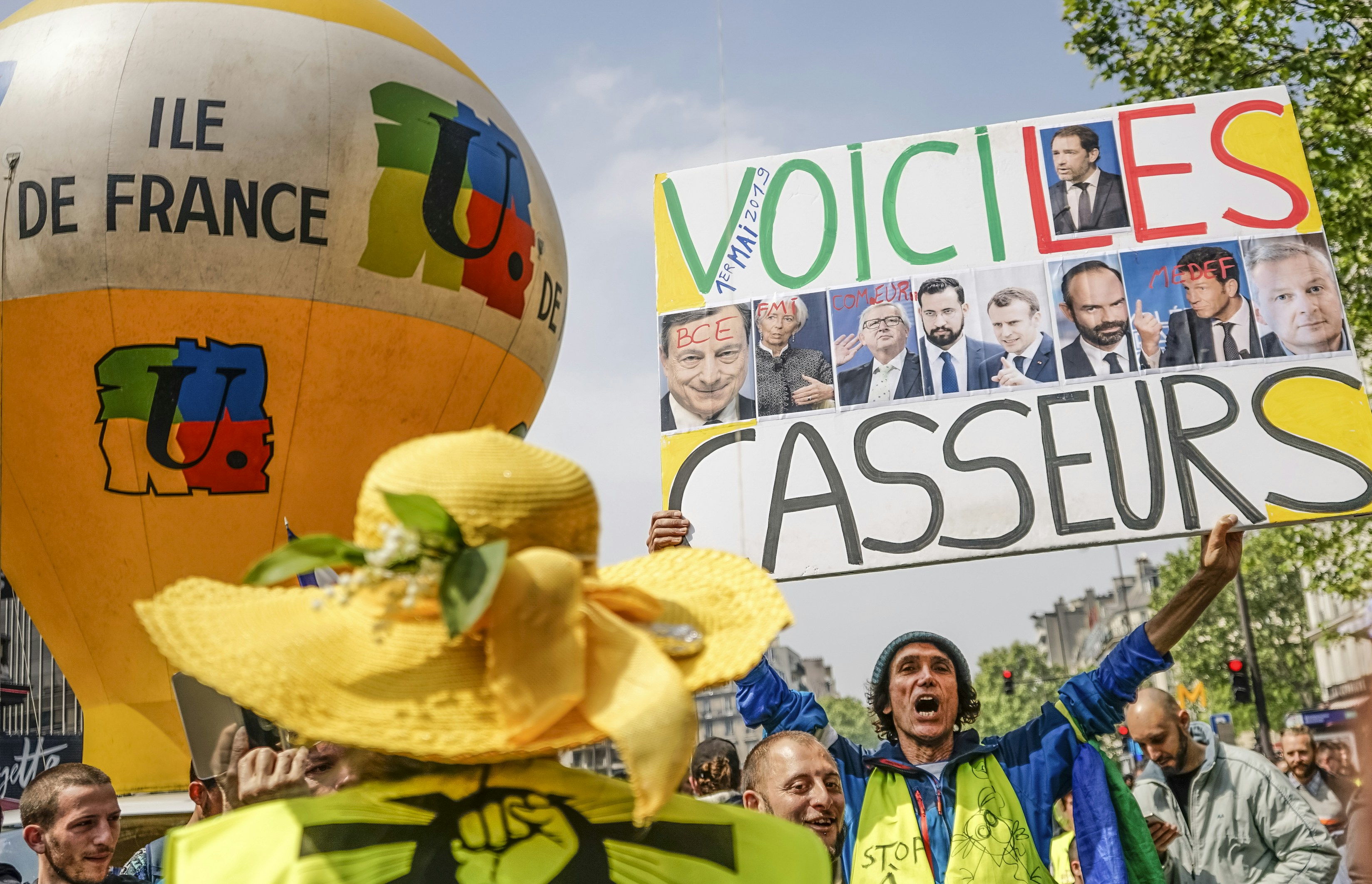
Not every episode of protest reflects neighborhood anger. Demonstrations against pension reform or changes to labor rules often involve different constituencies, including workers, unions, and people concerned about social protections. Their grievances may center on retirement security, wages, working conditions, or the distribution of economic costs. These mobilizations can be large and disruptive, yet should not be conflated with unrest following a local confrontation with police. France’s protests emerge from varied histories and political demands. Distinguishing them matters: it avoids reducing complex events to a single cause.
A demonstration can change character quickly when a tense encounter develops between protesters and police. A blocked route, an arrest, a thrown object, or the use of crowd-control measures may trigger movement and reaction across a dense crowd. People who are not involved in a confrontation can be pushed forward, separated from companions, or respond to what they believe is happening nearby. In such conditions, rumors and incomplete information travel rapidly, while decisions are made under stress. A small clash may draw in others or prompt people to flee, creating further confusion. Escalation is not automatic: many demonstrations remain peaceful even when disagreements are sharp, and the conduct of a few people should not be attributed to everyone present.
Policing can influence whether tensions subside or intensify. Visible, proportionate measures and clear communication may help protect people, maintain safe routes, and discourage assaults or damage. Yet forceful tactics can have the opposite effect when participants or observers regard them as excessive, indiscriminate, or unsupported by clear explanations. Injuries, arrests, or force used against peaceful marchers may deepen anger and reinforce perceptions of unfair treatment, drawing additional people into the streets. The same action may be interpreted differently by officials, demonstrators, and nearby residents. Outcomes depend on context, including prior trust in institutions, crowd density, the immediate threat, and whether authorities distinguish between violent acts and peaceful assembly.
Social media can add speed and visibility to these events. Images of clashes or damaged property may circulate widely before their circumstances are verified, while posts sharing locations or calls to gather can bring more people to an area. Online attention may also help document events and communicate safety information, so its effects are not uniformly harmful. It is important to recognize that protesters are not a single group: some attend peacefully to express political demands, while others may commit violence or seize opportunities for looting. Residents and workers caught up in unrest may have no role in either activity and can face disrupted transport, damaged businesses, or fear for their safety. These differing aims and experiences shape how people understand the same unfolding events.
Authorities commonly respond to rioting with intensified policing, arrests, curfews or restrictions on public gatherings, alongside public statements urging calm. Officials may also promise investigations into alleged misconduct and announce reforms intended to address grievances. These measures can be disputed from different perspectives: some residents and businesses seek a rapid restoration of safety, while protesters and rights groups may view forceful enforcement as excessive or investigations as insufficiently independent. Political leaders, meanwhile, can disagree over whether the priority should be public order, institutional accountability or social investment.
The immediate costs are often borne by people who did not take part. Residents may face damaged homes, disrupted transport, fear and difficulty reaching work or essential services. Shop owners can lose income through closures, vandalism or fire, and public facilities such as schools, libraries and clinics may be damaged or temporarily unavailable. Beyond physical harm, repeated confrontations can deepen mistrust between communities and police, weaken confidence in public institutions, and sharpen national debates about discrimination, security, inequality and the right to protest. The effects may persist after streets have been cleared.
More durable responses are likely to require credible, transparent investigations when misconduct is alleged, with findings and consequences communicated clearly. Accountable policing—including appropriate training, oversight and proportionate use of force—can help build legitimacy. Meaningful dialogue with affected communities may identify local concerns that cannot be resolved through enforcement alone. Addressing persistent economic and social inequalities, including barriers to education, employment and housing, is also important, although such work takes time and cannot guarantee that unrest will never occur. No single policy can prevent every episode, particularly when immediate triggers and local circumstances differ.
France’s episodes of unrest should therefore be understood in their particular contexts, not treated as one recurring event with one cause. Riots following a disputed police encounter, protest movements over national policy and disturbances linked to other grievances may overlap in public debate, but they are not interchangeable. Careful responses depend on distinguishing their triggers, participants and underlying conditions while protecting both public safety and civil rights.